The GlucoContext Guide to Preparing for a Care Visit
Prepare for a diabetes care visit with organized priorities, records, access concerns, shared decisions, and a clear follow-up plan in everyday context.

A well-prepared care visit is not a performance review. It is a structured conversation about health, safety, daily life, and what support is needed next. Diabetes care can involve glucose information, laboratory tests, medicines, devices, nutrition, activity, sleep, emotional well-being, preventive screening, complications, costs, access, and family responsibilities. Limited appointment time makes prioritization valuable, but patients should not have to compress every concern into a flawless summary. This guide shows how to prepare a one-page agenda, organize accurate records, communicate symptoms and barriers, participate in shared decisions, and leave with a workable follow-up plan. It offers general education only. Individual responses vary, and diagnosis, personal targets, medicine changes, and treatment decisions belong with qualified healthcare professionals. Use the care team's contact and urgent-care instructions whenever a concern should not wait for a scheduled visit. Daily circumstances may influence what is practical, so a flexible plan should reflect the person's resources, preferences, and guidance from a qualified healthcare professional.
1. Clarify the type and purpose of the visit
A routine follow-up, new-patient consultation, nutrition visit, device training, laboratory review, and urgent symptom appointment require different preparation. Read the appointment notice and ask the clinic whether tests, fasting, device uploads, forms, referrals, or an arrival time are required. Do not assume that a routine article's instructions apply to a clinical test. If preparation directions are unclear or conflict with the treatment schedule, contact the clinic before the visit rather than improvising.
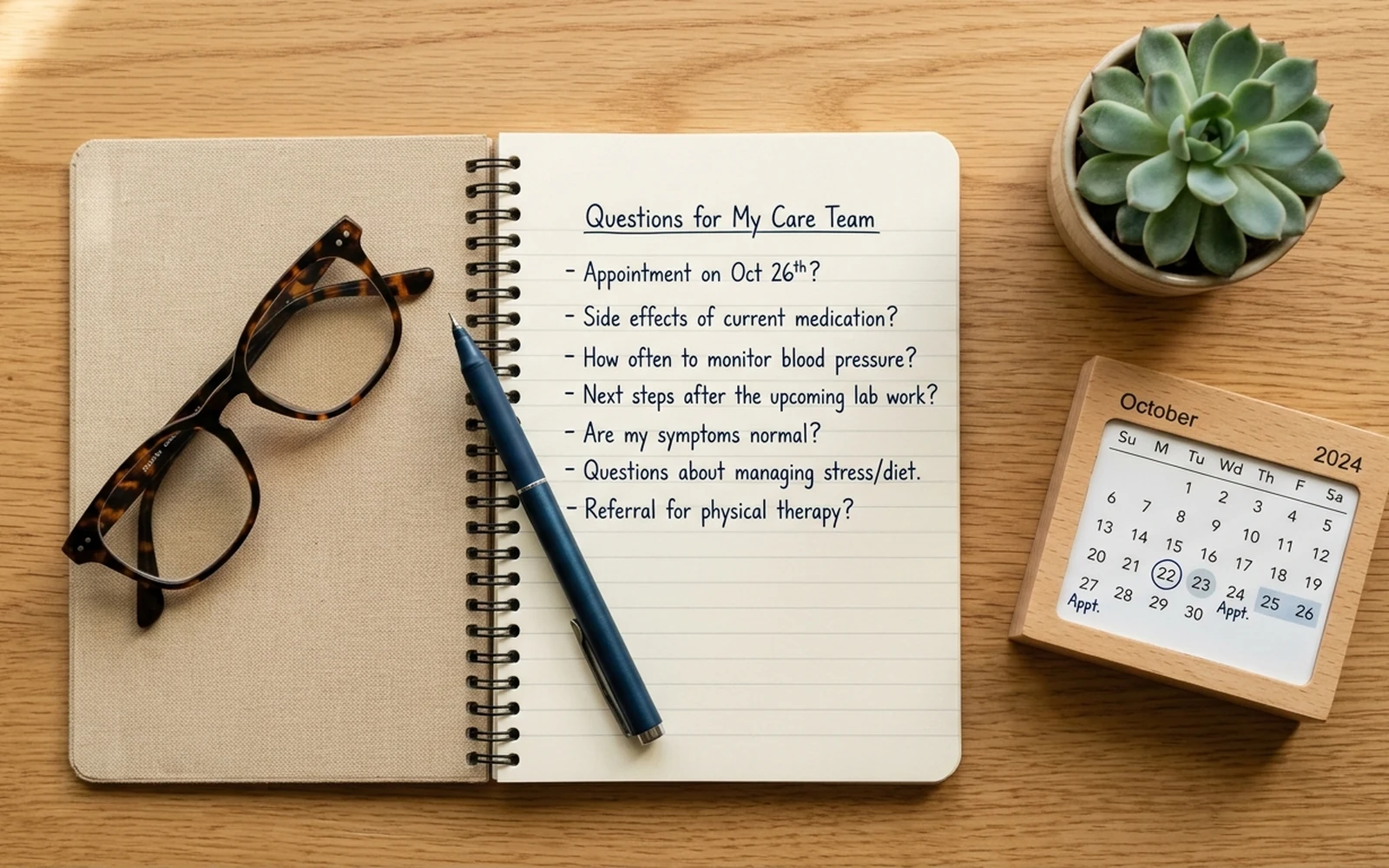
Decide what would make the visit useful from your perspective. Perhaps you need an explanation of a result, help with recurring symptoms, a simpler monitoring plan, supply authorization, nutrition support, or discussion of treatment burden. Write that purpose in one sentence. It can be shared at the start and compared with the clinician's agenda. When goals differ, naming both allows the team to negotiate priorities instead of leaving the patient's main concern until the final minute.
2. Build a one-page agenda
Start with an unrestricted list of questions, then mark the top two or three based on urgency, effect on daily life, or uncertainty. Use specific wording: “I have had new foot discomfort for ten days” or “I cannot afford the current sensor copay” is more actionable than “diabetes is difficult.” Include a line for what has changed since the last visit and a line for the outcome you hope to understand. Keep the longer list so unaddressed items can be routed to messages, referrals, education, or future appointments.
Place new or severe symptoms first, and follow the established urgent-care pathway rather than waiting when required. A visit agenda is not a substitute for timely care. If emotional distress, fear of readings, food restriction, depression, or burnout affects daily management, include it without shame. These concerns can shape safety and the feasibility of the plan. Ask for privacy if you do not want a companion present for part of the conversation, or invite a trusted care partner when their support would help.
3. Reconcile medicines, supplements, and supplies
Create a current list of prescriptions, nonprescription medicines, vitamins, herbs, and supplements. Include the product name, strength shown on the container, how it is actually taken, purpose if known, prescriber, recent changes, missed access, and possible side effects. Accuracy matters more than trying to appear perfectly adherent. Bring bottles, pharmacy printouts, or clear photographs if requested. Report allergies and adverse reactions separately so they are not lost in a general note.
List monitoring and treatment supplies, including the exact meter, strips, CGM, reader, phone app, pump, needles, or other equipment used. Note expired items, skin or adhesion problems, error messages, accessibility barriers, training needs, and supply gaps. Bring equipment when the clinic asks. Do not change or stop treatment to simplify the list. The purpose of reconciliation is to let qualified professionals identify discrepancies, interactions, duplication, and practical obstacles before giving new instructions.
4. Organize glucose data and laboratory questions
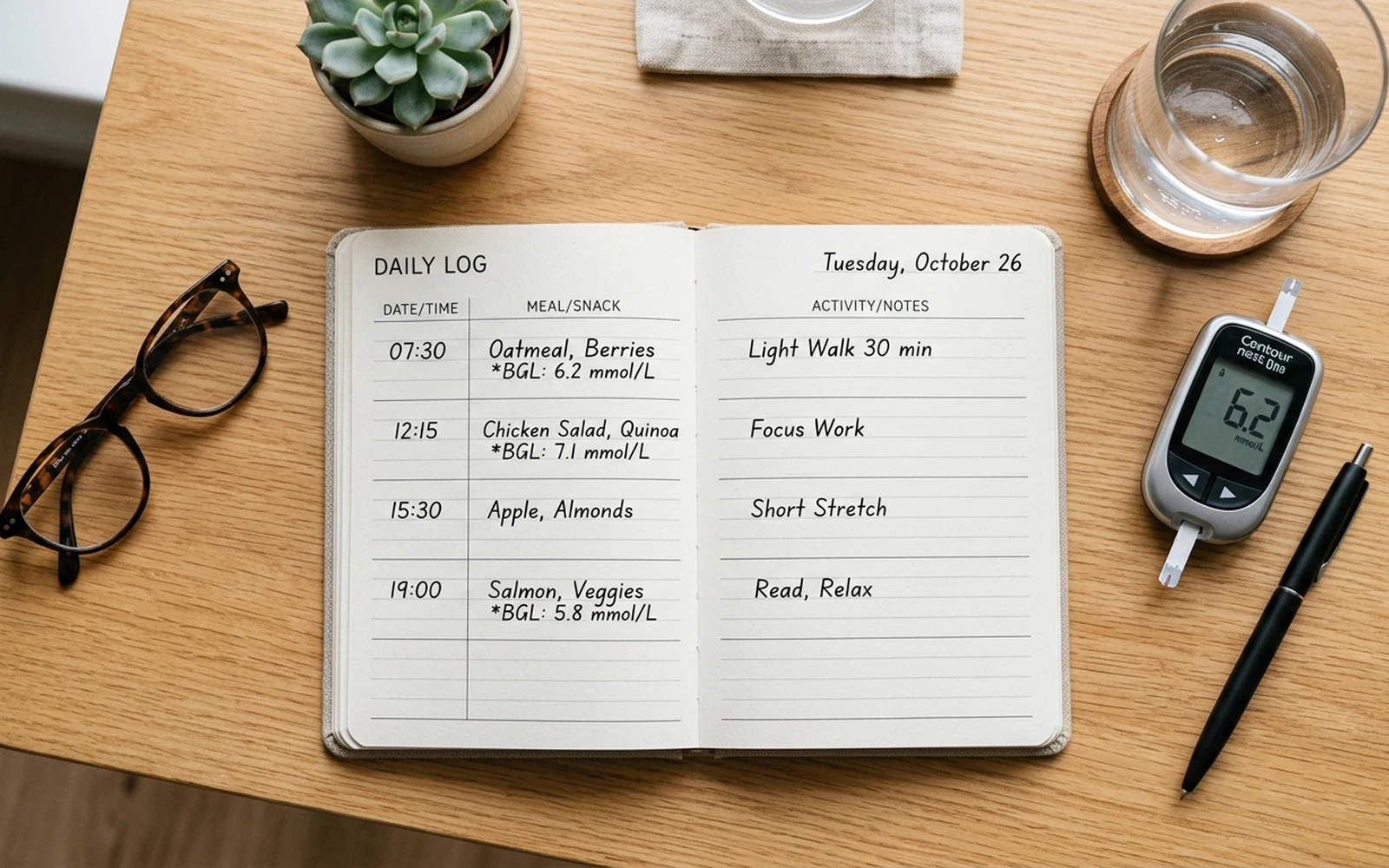
Ask what data format the clinic can open. Upload a device report in advance when possible, bring a paper log for selected checks, or have the app available without depending on an unreliable connection. Add a short summary that states the date range, measurement method, usual timing, apparent repeated features, exceptions, symptoms, and data gaps. Avoid selecting only dramatic screenshots. The complete agreed period helps the clinician judge whether the pattern is representative.
List laboratory results you want explained, but avoid interpreting a single result in isolation. A1C, kidney tests, lipids, liver tests, and other measures answer different questions and may be affected by health context. Ask what the result measures, what could influence it, how it fits with other information, and whether follow-up is needed. Do not adopt another person's target. Discuss individual goals with a qualified healthcare professional who can consider health history, risks, treatment, and preferences.
5. Describe symptoms, daily routines, and barriers
For a symptom, record when it began, location, quality, frequency, duration, triggers, relieving factors, associated signs, and effect on daily activities. Mention recent illness, falls, wounds, vision changes, dental concerns, sleep problems, or emotional changes as relevant. Do not delay urgent evaluation merely to improve the description. Photos or home measurements may help in some situations, but collect them only safely and according to professional advice.
Daily realities belong in clinical planning. Explain unpredictable shifts, caregiving, food insecurity, housing instability, transportation, cost, insurance, pharmacy access, language, literacy, vision, hearing, dexterity, technology, religious practices, and cultural food patterns. These are not excuses; they determine whether instructions are usable. Ask for an interpreter, accessible documents, social-work support, financial resources, a pharmacist, diabetes education, nutrition services, or another referral when needed. A simpler realistic plan can be safer than an idealized plan that cannot be followed.
6. Participate in shared decisions
When a recommendation is offered, ask what problem it addresses, the expected benefits, possible harms or burdens, alternatives, cost, monitoring needs, and what happens if the decision is postponed. Share preferences and prior experiences. If several changes are proposed, ask which is most important and how success will be evaluated. Shared decision-making does not require becoming a medical expert; it requires enough understandable information to connect professional advice with the person's values and circumstances.
Use teach-back: explain the plan in your own words and invite correction. This is a test of communication, not intelligence. Ask for numbers, timing, and warning signs to be written in the individualized instructions rather than relying on memory. If language or hearing makes communication difficult, request appropriate support. Do not agree silently to a plan you cannot afford, understand, or carry out. Naming the barrier allows the team to look for alternatives or document why another path is needed.
7. Leave with a follow-up map
Before the visit ends, summarize what changes, what remains the same, who will order tests or referrals, where prescriptions go, how supplies will be obtained, and when results will be discussed. Confirm the next appointment or the trigger for scheduling it. Ask which communication channel to use, how quickly messages are usually answered, and whom to contact after hours. Clarify the symptoms or observations that require an earlier call or urgent evaluation under the personal plan.
Afterward, compare the after-visit summary with your notes and contact the clinic or pharmacist when something is inconsistent or unclear. Update the medicine list only from confirmed instructions. Place follow-up dates on a calendar and keep orders together. Individual responses vary, so discuss individual goals with a qualified healthcare professional rather than filling gaps with online advice. Preparation has succeeded when the next steps are understandable and feasible, not when every possible topic has been solved in one encounter.
Questions for Your Care Team
These prompts are for a conversation with a qualified healthcare professional. They are not instructions to change a personal care plan.
- Which concerns need attention today, which require urgent or separate evaluation, and which can be addressed through follow-up?
- How do my symptoms, laboratory results, medicines, device reports, and daily context fit together in your clinical assessment?
- What alternatives or support resources could make the plan safer and more workable given cost, access, schedule, and preferences?
- What changes, what remains unchanged, who handles each next step, and when or why should I contact the team again?
Sources
GlucoContext prioritizes authoritative United States health organizations and peer-reviewed research. External pages are controlled by their publishers.