How to Organize a Simple Glucose Log
Create a concise glucose log that links readings with timing and useful context, making patterns easier to review without tracking everything.
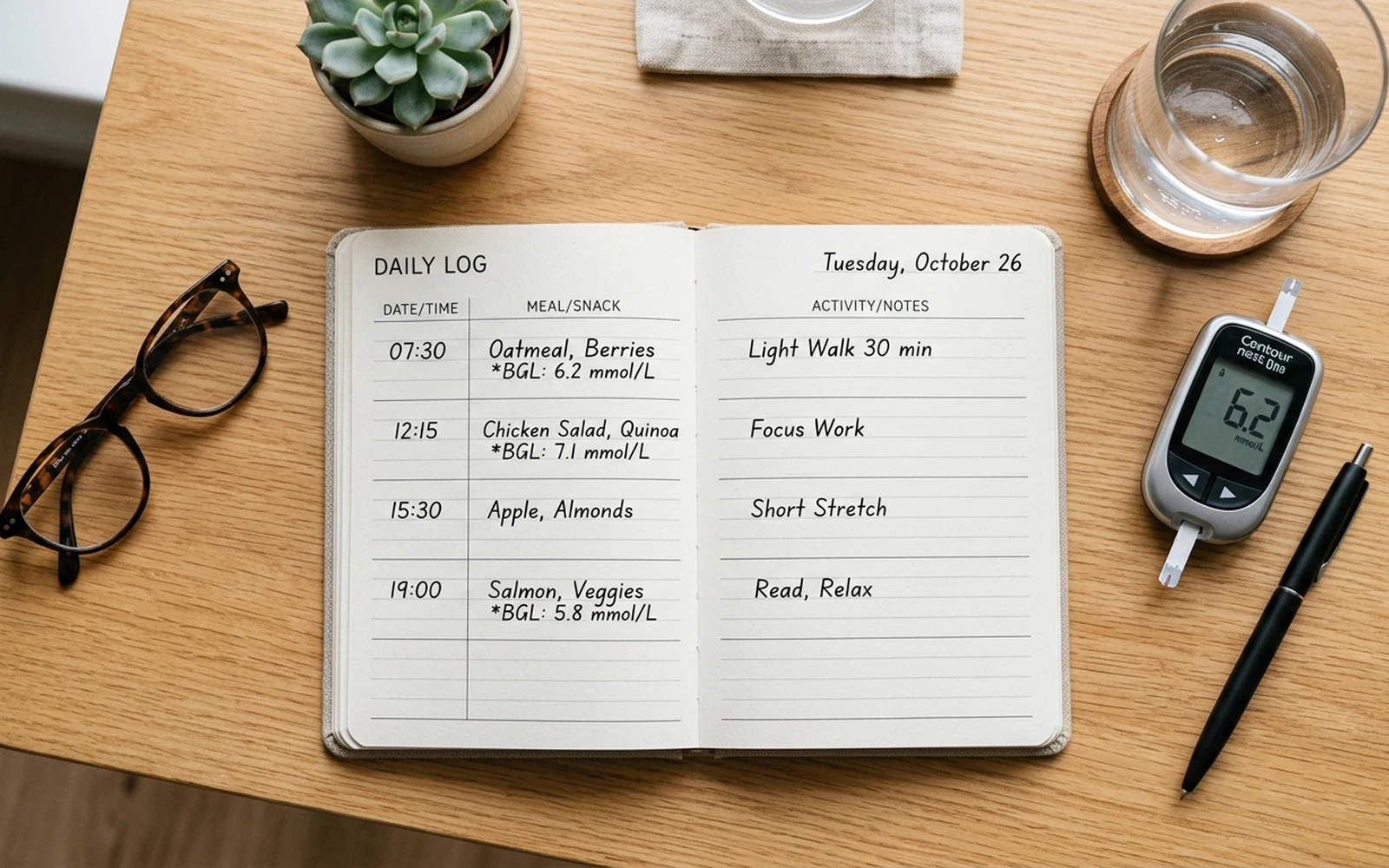
A glucose log is useful when it answers a care question, not when it captures every detail of every day. The basic record usually needs a date, time, glucose value, relationship to a meal or activity, and a brief note when something relevant was different. Device downloads may supply much of this information automatically, while a paper page can work just as well for selected checks. A simple structure reduces burden, supports fair comparisons, and gives the care team enough context to interpret patterns cautiously.
Start with the question
Before designing columns, ask what the log is meant to clarify. It might organize scheduled checks, compare a recurring time of day, document symptoms, or prepare for a visit. A defined purpose determines what belongs on the page and prevents unrelated data from accumulating without a plan for review.
Ask the care team which measurements are requested and how they should be timed. More checks are not automatically more useful and can create cost, discomfort, or anxiety. Follow the individualized monitoring plan rather than adding tests because a template has empty spaces or another person checks more often.
Use a small core of fields
A practical row can include date, clock time, value, measurement method, and a label such as fasting, before meal, after meal, bedtime, activity, or symptoms. If timing follows a meal, note when the meal began or use the convention agreed upon with the clinician. Consistent labels make sorting easier.
For CGM data, the core record may be a generated report plus a short event note rather than copied readings. Record sensor changes, gaps, or alerts only when relevant. Confirm how the care team prefers to receive reports and whether sharing is continuous, uploaded before visits, printed, or reviewed on screen.
Add selective context
Useful notes are short and specific: “restaurant lunch,” “walked after dinner,” “fever,” “poor sleep,” or “washed hands and repeated per plan.” Exact ingredient lists and emotional narratives are rarely needed for every entry. Reserve more detail for the situation currently being explored with the care team.
Context suggests questions; it does not prove causes. A higher-than-usual value on a stressful day does not establish that stress produced it. Several variables may influence the result, and chance or measurement variation may contribute. Phrase notes as observations so a clinician can evaluate them without inheriting a conclusion.
Mark patterns visually
Simple visual cues can help: one column for morning checks, consistent meal labels, or a small symbol for activity. Avoid color systems that classify numbers as moral successes or failures. Neutral highlights can identify repeated time windows, missing data, or questions to review while keeping the record emotionally manageable.
Review a limited period at a time. Look for repeated features under similar conditions and count how often they occur. Also notice days that do not fit the apparent pattern. Exceptions can reveal a timing difference or missing context and prevent a dramatic but unsupported conclusion from a small group of values.
Prepare a one-minute summary
Before an appointment, write two or three sentences: what was monitored, what seemed repeated, what was unusual, and what question remains. Bring the original log or report so the clinician can check the summary. Include symptoms and safety events clearly rather than burying them among routine notes.
Follow the response instructions in the individual care plan when urgent patterns or symptoms occur; do not wait for a routine visit merely to complete a log. For nonurgent review, discuss individual goals with a qualified healthcare professional. Do not alter medication or treatment based on a self-identified pattern without clinical guidance.
Questions for Your Care Team
These prompts are for a conversation with a qualified healthcare professional. They are not instructions to change a personal care plan.
- What specific question should my glucose log help us answer right now?
- Which timing labels and context fields do you want me to use consistently?
- How much data should I collect before we review it, and how should I share it?
- Which readings, symptoms, or device events require contact before the next appointment?
Sources
GlucoContext prioritizes authoritative United States health organizations and peer-reviewed research. External pages are controlled by their publishers.