Reading Your Numbers
Understand meters, CGM, fasting and after-meal readings, logs, patterns, and the questions that make monitoring more useful.
Turn readings into better questions
Monitoring tools capture moments and trends, but they do not explain themselves. Learn how timing, technique, symptoms, routines, and care-plan instructions shape a useful conversation.
See the reading paths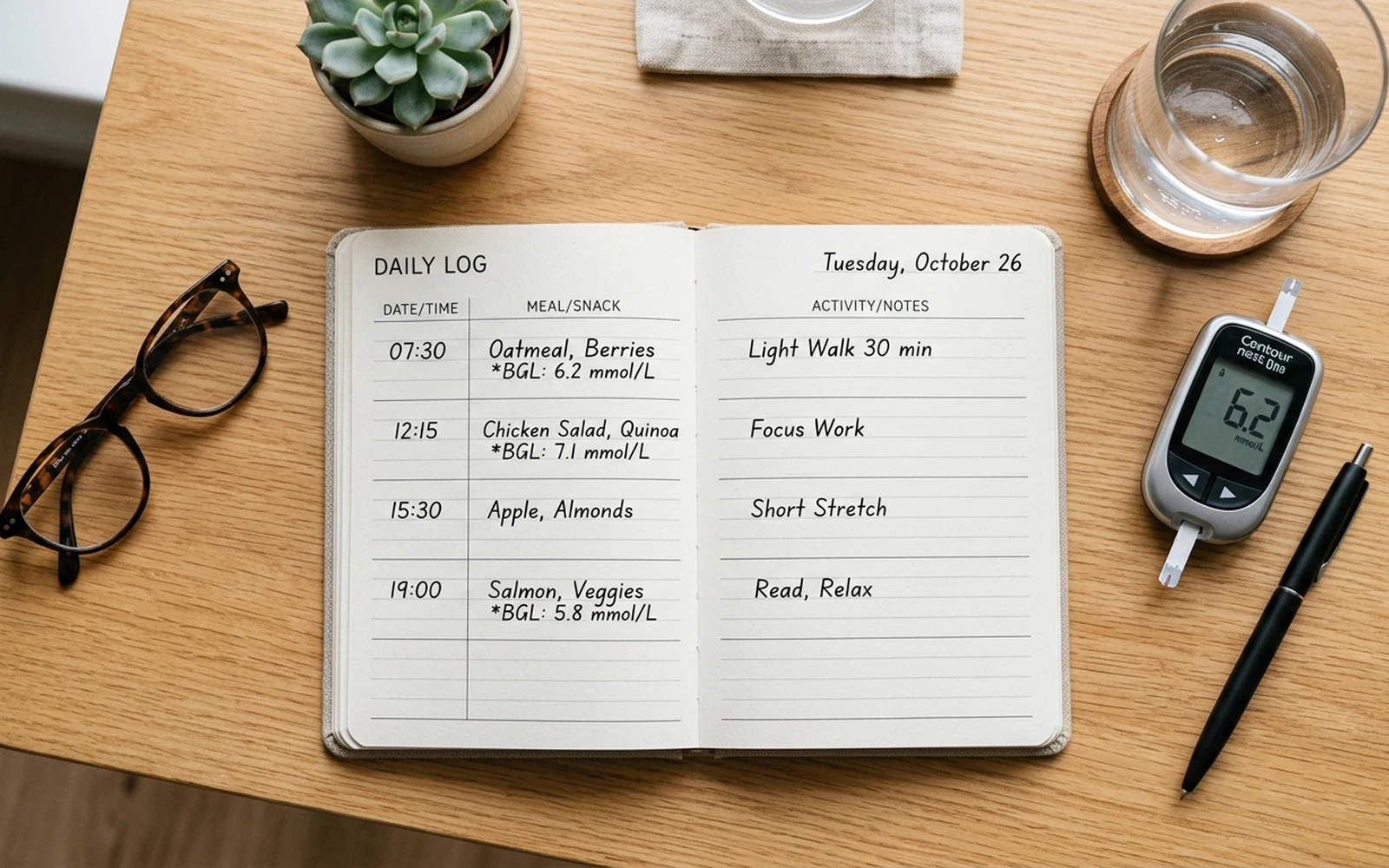
3 clear places to begin.
Each page includes key takeaways, practical context, authoritative sources, related reading, and questions for a care conversation.
Glucose Meter Versus Continuous Glucose Monitor
Compare glucose meters and continuous glucose monitors, including what each measures, common limitations, and questions for choosing a tool.
How to Organize a Simple Glucose Log
Create a concise glucose log that links readings with timing and useful context, making patterns easier to review without tracking everything.
Questions to Ask About Unexpected Readings
Use calm, safety-focused questions to document an unexpected glucose reading, check context, and communicate clearly with your care team in everyday context.
Open a page and follow the context.
Read in any order. Each chapter stands on its own and links naturally to the next useful question.
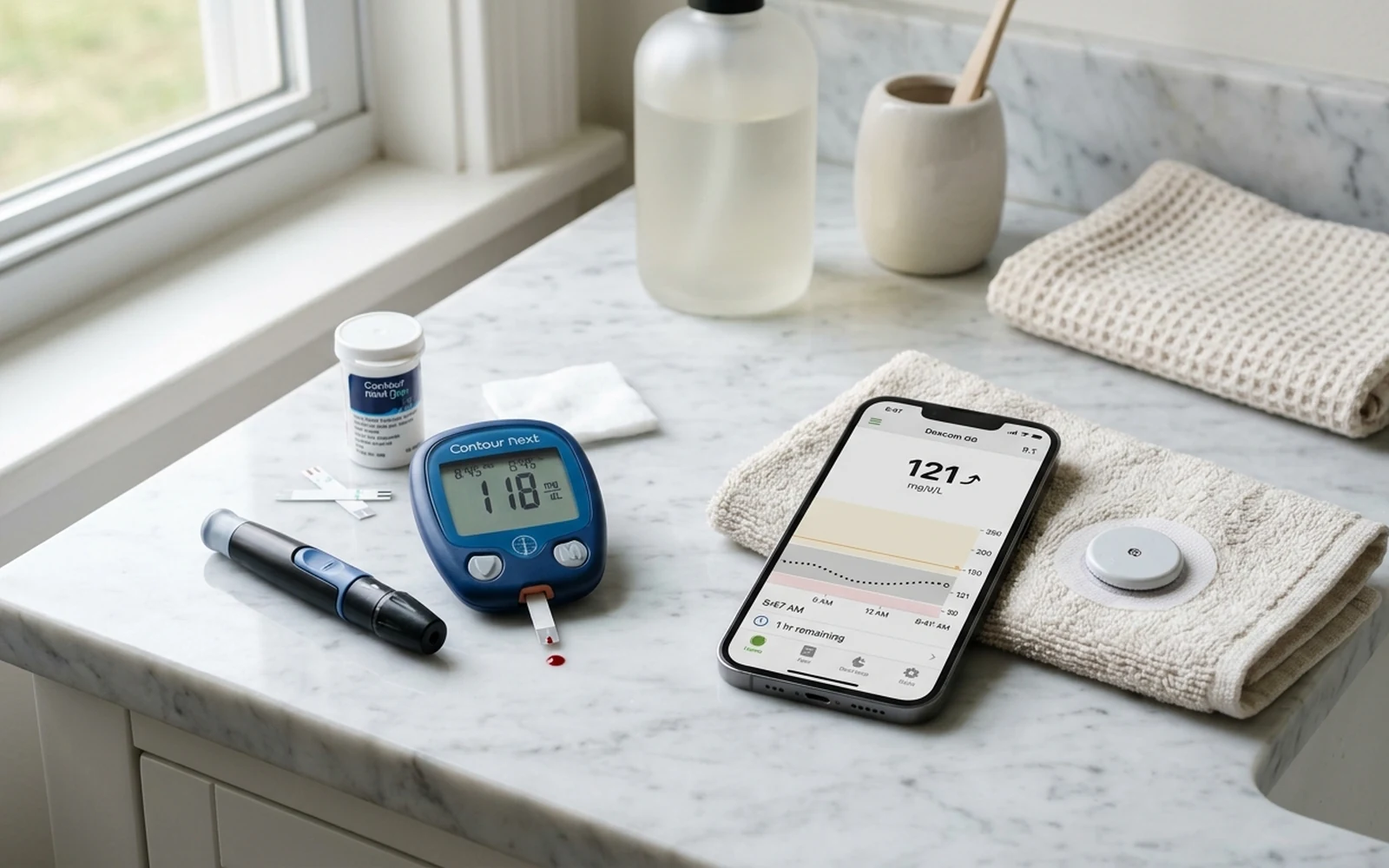
Glucose Meter Versus Continuous Glucose Monitor
Compare glucose meters and continuous glucose monitors, including what each measures, common limitations, and questions for choosing a tool.
How to Organize a Simple Glucose Log
Create a concise glucose log that links readings with timing and useful context, making patterns easier to review without tracking everything.

Questions to Ask About Unexpected Readings
Use calm, safety-focused questions to document an unexpected glucose reading, check context, and communicate clearly with your care team in everyday context.