Preparing Notes for a Diabetes Care Appointment
Prepare concise visit notes that organize priorities, medicines, patterns, symptoms, and practical barriers for a more focused care conversation.

A diabetes appointment may need to cover laboratory results, monitoring, medicines, nutrition, activity, sleep, complications, preventive care, supplies, costs, and everyday concerns in limited time. A one-page note can keep the most important topics visible and reduce the burden of remembering details under pressure. The goal is not to produce a perfect health report. It is to identify priorities, provide accurate lists and short pattern summaries, and leave with clear next steps. Care partners or interpreters can be included when helpful and desired.
Set priorities in advance
Write every concern first, then mark the few that most need attention at this visit. Examples include a new symptom, recurring pattern, side effect, supply problem, food concern, or confusion about instructions. Give the list to the clinician at the beginning so the available time can be planned openly.
Not every topic can be resolved in one appointment. Ask which items need immediate discussion, which can be handled by a message, and which require another professional or follow-up visit. Prioritizing is not withholding information; it is a way to make the care process more navigable and safer.
Update medicines and supplies
List prescription medicines, nonprescription products, vitamins, and supplements with the way they are currently taken. Note allergies, recent changes, missed access, side effects, and who prescribed each item when known. Bring bottles or pharmacy records if the clinic recommends them. Do not rely on memory for unfamiliar names.
Mention meter strips, sensors, lancets, pen needles, pumps, or other supplies that are difficult to obtain or use. Coverage rules, prescription wording, training, and technical problems can affect the plan. A practical obstacle is clinical information, not a personal failure, and the team may be able to connect it with resources.
Summarize patterns rather than reciting data
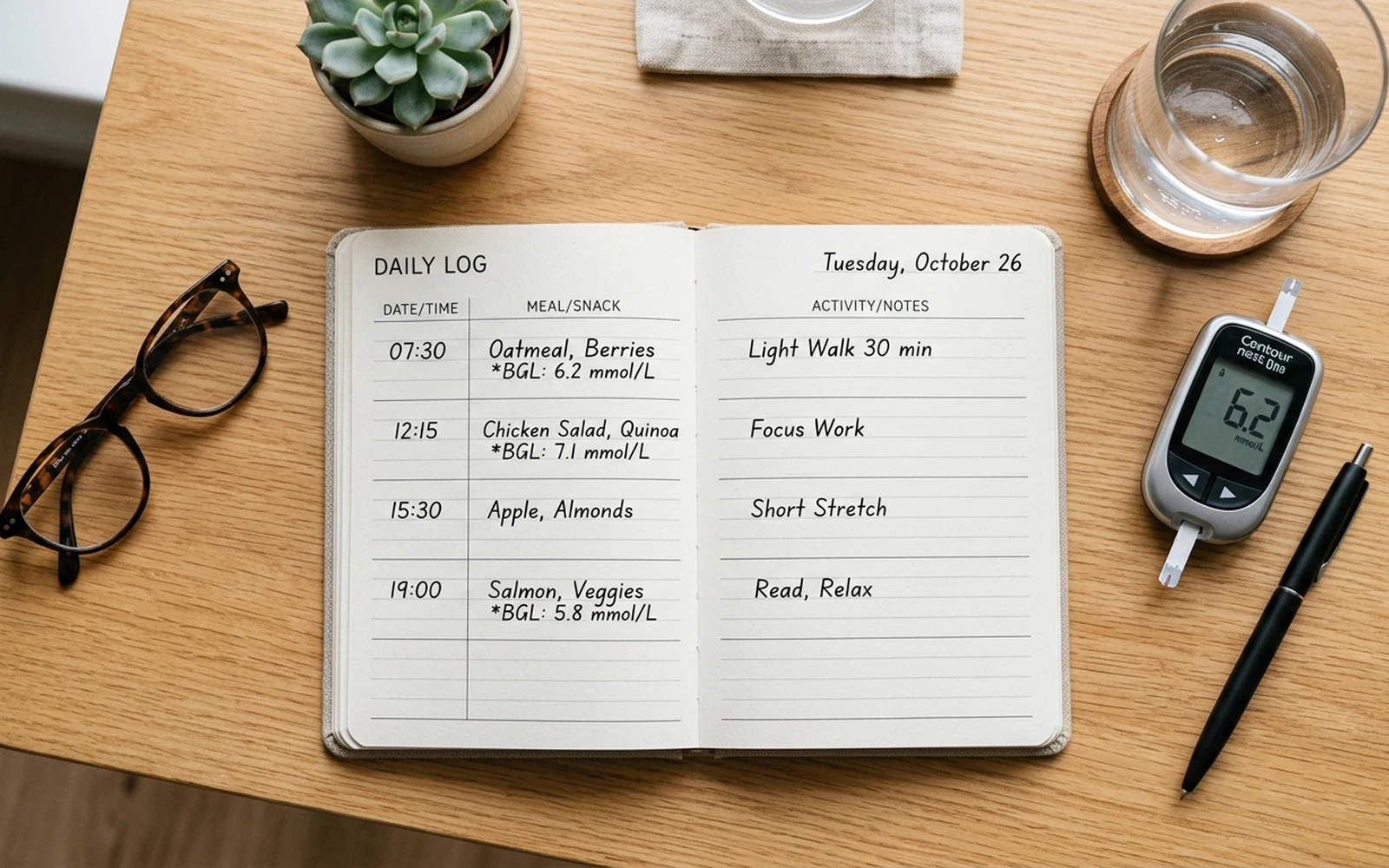
Bring the requested log or device report, but add a short summary: the dates covered, when values were collected, what seemed repeated, and what was unusual. Include measurement gaps and context. A clinician can examine the underlying information while using the summary to understand your main question quickly.
Avoid assigning causes in the summary. “Higher than my usual pattern on several work mornings after poor sleep” is more useful than “stress ruined my glucose.” Neutral wording leaves room to examine timing, technique, treatment, sleep, food, and other factors together. Individual responses vary and require clinical interpretation.
Name symptoms and daily barriers
Record when symptoms began, how often they occur, what they feel like, and what makes them better or worse. Seek prompt care rather than waiting for an appointment when the personal plan or severity indicates urgency. Photos, dates, or home measurements may help only when collected safely and requested.
Explain barriers directly: unpredictable shifts, caregiving, low appetite, food insecurity, housing changes, transportation, language, vision, dexterity, distress, or cost. A plan that ignores these realities may not be usable. Asking for simpler instructions, an interpreter, accessible materials, or a referral is a reasonable part of care.
Close the visit with a shared summary
Before leaving, ask what is changing, what stays the same, which tests or referrals are planned, and when follow-up should occur. Repeat instructions in your own words so misunderstandings can be corrected. Request written information in an accessible format and confirm which contact route to use for questions.
Do not fill gaps by guessing after the visit. Contact the care team or pharmacist for clarification, especially when instructions relate to medicines or urgent situations. Discuss individual goals with a qualified healthcare professional and ensure that the plan reflects health history, preferences, safety needs, and what is realistically possible between visits.
Questions for Your Care Team
These prompts are for a conversation with a qualified healthcare professional. They are not instructions to change a personal care plan.
- Which of my concerns should we prioritize today, and what needs a separate follow-up?
- How do my monitoring information, symptoms, and laboratory results fit together?
- Can we simplify any part of the plan that is difficult because of cost, access, or schedule?
- What are the next steps, who is responsible for each one, and when should I contact you?
Sources
GlucoContext prioritizes authoritative United States health organizations and peer-reviewed research. External pages are controlled by their publishers.