Walking After Meals as an Everyday Routine
Consider how a comfortable post-meal walk may fit daily life, with attention to safety, access, consistency, and individualized care guidance.

A walk after a meal can be a simple way to add movement to the day, but simple does not mean suitable for everyone or identical in every setting. Muscle activity may influence glucose use, while the experience also depends on pace, duration, timing, fitness, weather, mobility, food, medicines, and health conditions. The most useful routine is safe, accessible, and modest enough to repeat. A care team can help determine whether post-meal activity fits an individual's plan and what precautions are needed.
Why timing may matter
After eating, digestion makes nutrients available, and contracting muscles use energy. Research has examined movement performed after meals as one way activity may influence post-meal glucose patterns. The size and timing of an effect vary, so walking should not be presented as a predictable correction for a particular meal or reading.
A routine can have benefits beyond glucose, including a transition between activities, outdoor time, stress relief, or shared conversation. Those reasons may make it worth doing even when no measurement is collected. Framing the walk only as a way to change a number can create pressure and obscure other meaningful outcomes.
Check personal safety first
Foot conditions, balance problems, heart or lung disease, vision changes, neuropathy, pregnancy, recent illness, and some medicines can affect activity guidance. People using treatments associated with low glucose may need specific monitoring and response instructions. A qualified professional should address these details before a new routine begins.
Follow the personal plan for symptoms and unusual readings. General content cannot decide whether it is safe to start, continue, or stop activity in a particular moment. Chest discomfort, severe shortness of breath, faintness, or other urgent symptoms require the emergency pathway advised by healthcare professionals, not an online walking tip.
Design an accessible route
A safe route might be a hallway, indoor shopping area, workplace corridor, level sidewalk, or repeated path near home. Weather, lighting, traffic, air quality, restroom access, and places to rest all matter. Seated movement or another clinician-approved activity may be more appropriate when walking is not accessible.
Comfortable, properly fitting footwear and routine foot awareness may be important for many people with diabetes. Ask the care team for individualized foot-care advice, especially when sensation, circulation, skin, or previous injury is a concern. A short route close to support can be wiser than a scenic route far from help.
Attach movement to a cue
Habits are easier to remember when tied to a stable event: clearing lunch dishes, ending a work break, or taking the dog outside. Choose one meal or a few days rather than promising movement after every meal. A routine that survives busy days is more informative and sustainable than an ideal schedule attempted once.
Keep the starting plan intentionally manageable. Pace can be conversational and duration can reflect current ability and professional advice. Progress is not measured only by speed or distance. Repeating a safe routine, noticing comfort, and identifying barriers provide useful information for deciding whether and how it should develop.
Review the routine, not just readings
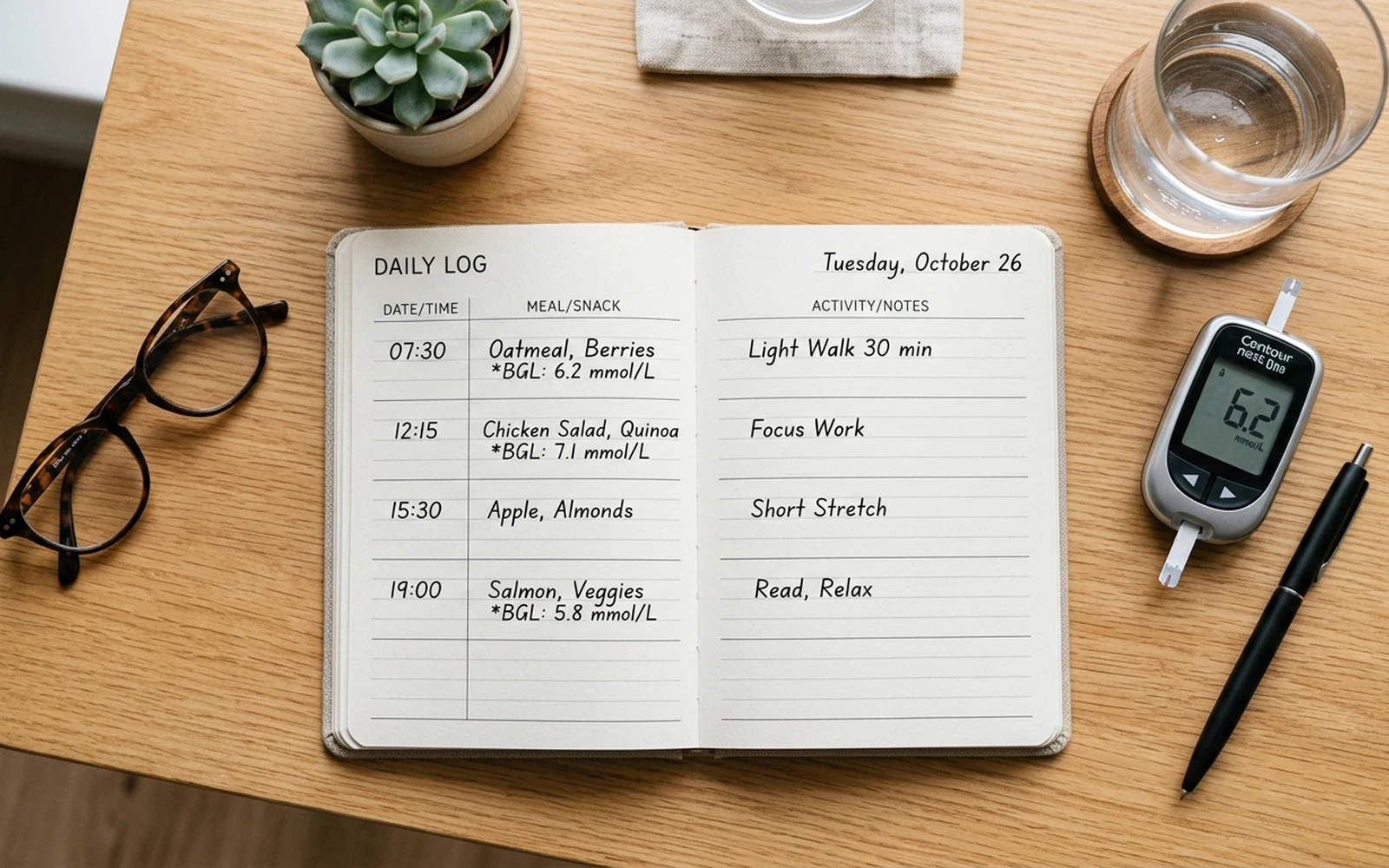
If monitoring is part of the care plan, record activity timing and broad context without expecting every walk to produce the same pattern. Meals, stress, sleep, temperature, pace, and measurement timing may influence what appears. One observation cannot establish that the walk caused the difference.
Also review nonnumeric outcomes: energy, mood, joint comfort, foot condition, schedule fit, and enjoyment. Bring concerns and patterns to the care team. Do not use walking to compensate for food or to make medication changes. Discuss individual goals with a qualified healthcare professional and keep the routine within agreed safety boundaries.
Questions for Your Care Team
These prompts are for a conversation with a qualified healthcare professional. They are not instructions to change a personal care plan.
- Is post-meal walking appropriate for my health history, treatment, mobility, and current fitness?
- What symptoms, readings, or foot concerns should change my activity plan or prompt contact?
- Do I need specific supplies, monitoring, identification, or timing precautions for a walk?
- What accessible alternative could provide movement when weather or mobility prevents walking?
Sources
GlucoContext prioritizes authoritative United States health organizations and peer-reviewed research. External pages are controlled by their publishers.