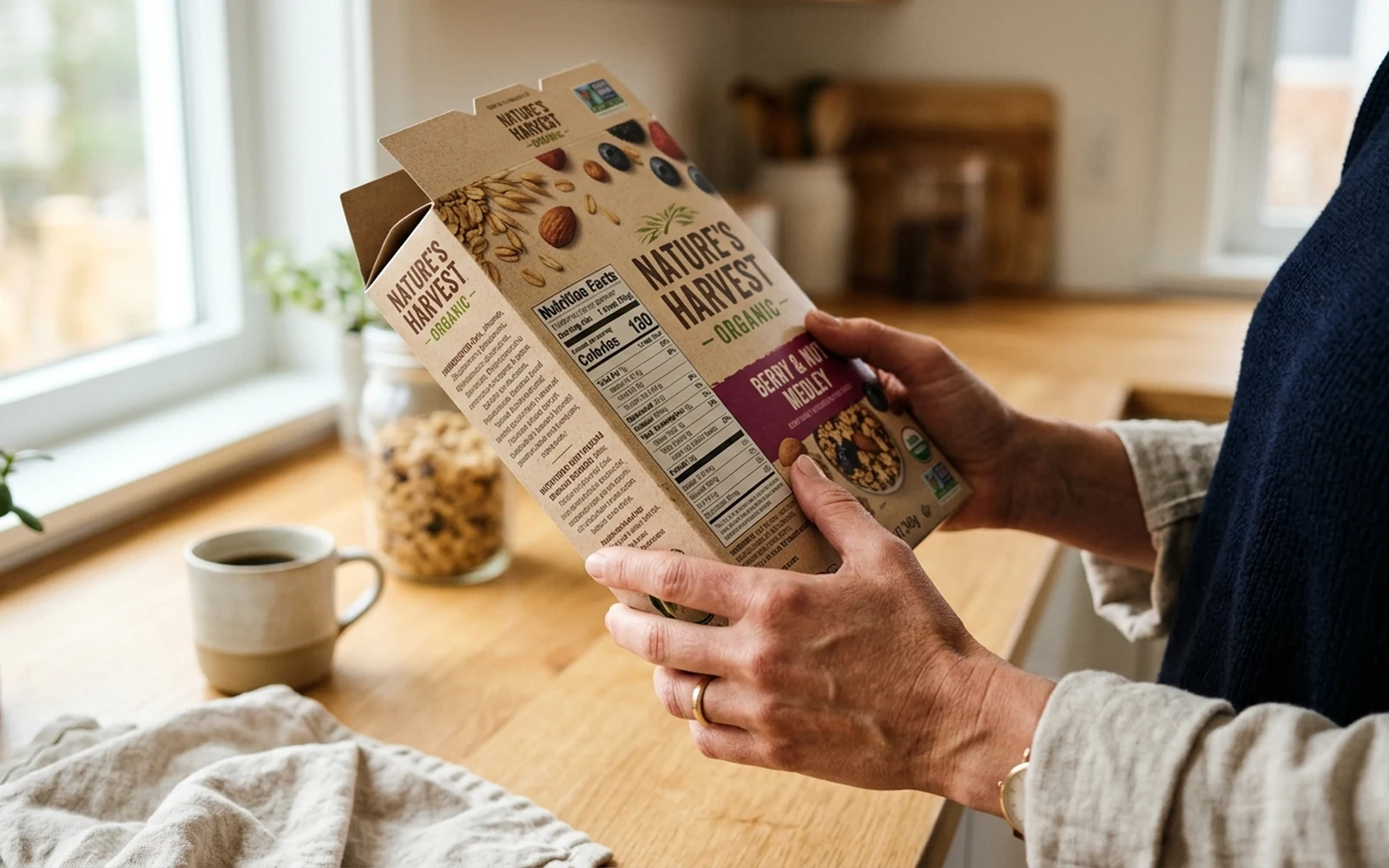
How to Read Total Carbohydrates on a Food Label
Use serving size and total carbohydrate together to compare packaged foods, understand portions, and bring clearer questions to your care team.
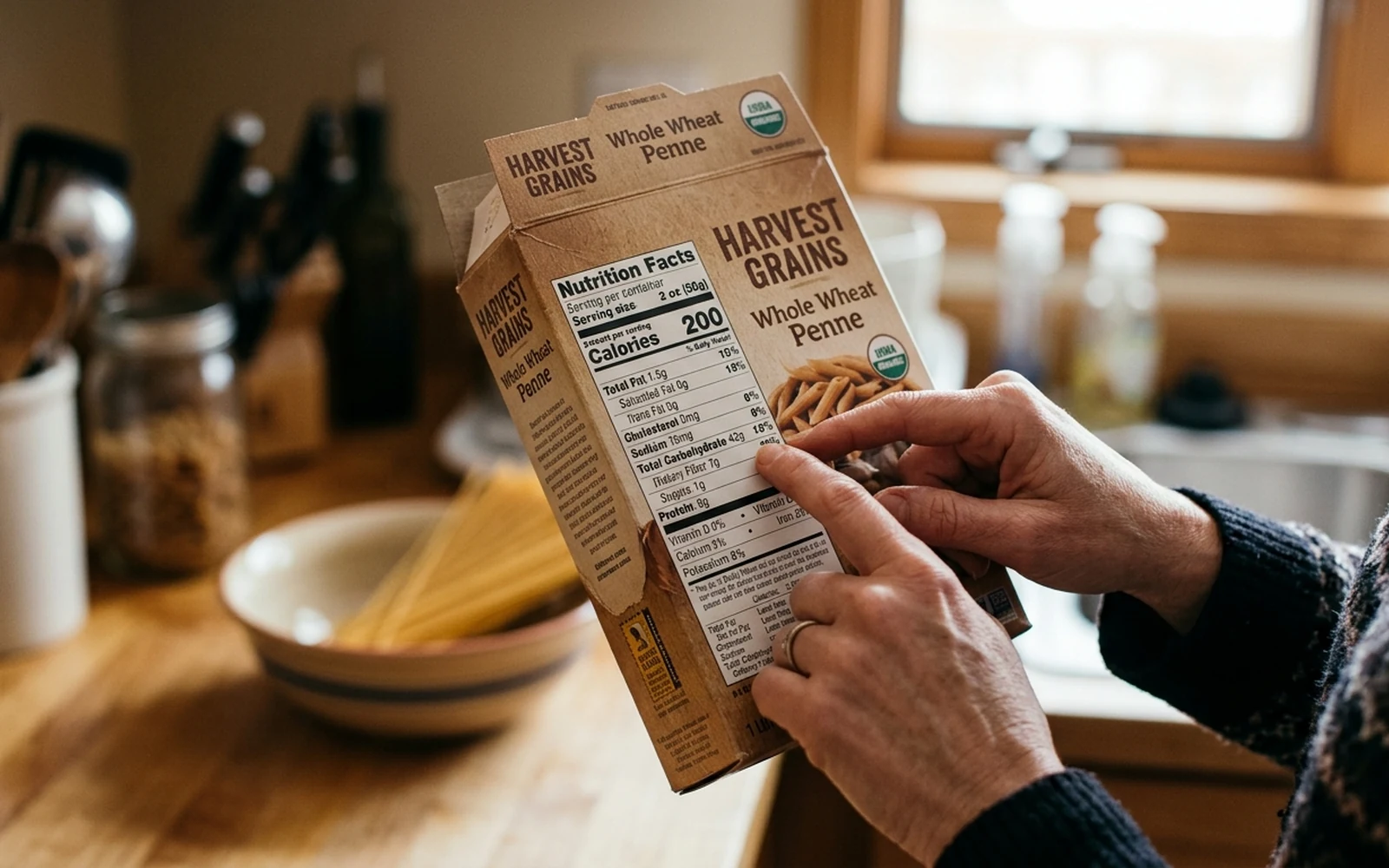
On a Nutrition Facts label, Total Carbohydrate is the main line for understanding how much carbohydrate is in a labeled serving. It includes sugars, starches, and dietary fiber rather than only ingredients that taste sweet. The number becomes meaningful only when paired with serving size and the amount actually eaten. Reading those two areas together can support consistent comparisons and more useful meal notes, while individual food choices and carbohydrate goals should be discussed with a qualified healthcare professional. Label literacy becomes easier when it follows the same short sequence every time. Starting with serving information prevents the common mistake of copying a nutrient number for a portion that is twice as large or half as large. Looking next at Total Carbohydrate keeps a low-sugar marketing claim from hiding starch. The remaining panel can then answer separate questions about fiber, protein, sodium, fats, and other nutrients relevant to the whole meal.
Find the serving first
Serving size appears near the top of the Nutrition Facts panel and is usually listed in a household measure plus a metric amount. It describes the quantity used for the label calculations. It is not automatically a recommendation for how much a particular person should eat and may differ from that person's usual portion.
Also check servings per container. A small bag or bottle may contain more than one labeled serving. If the entire package is consumed, the nutrient totals may need to be multiplied. Some packages use dual-column labels to show both per-serving and per-package information, which can make that comparison easier.
Locate Total Carbohydrate
Total Carbohydrate is listed in grams. It includes dietary fiber, total sugars, added sugars, and starches even though starch may not have its own line. For glucose-related meal planning, this total generally gives more complete label information than looking only at Total Sugars or Added Sugars.
Percent Daily Value appears beside many nutrients, including total carbohydrate, but it is based on a general reference diet and is not a personalized carbohydrate goal. The gram amount is the direct quantity for the labeled serving. Ask a clinician or registered dietitian how label information fits an individualized plan.
Match the label to the portion
If someone eats two labeled servings, the total carbohydrate is twice the listed amount. Half a serving contributes half. Portions such as one and a half servings require the same proportional calculation. Measuring occasionally can help connect package descriptions with the bowls, glasses, or handfuls used at home.
The calculation is an estimate because portions and manufacturing naturally vary, but it is usually more informative than treating every package as one serving. Write down both the portion and the resulting total when comparing foods. That record makes it easier to spot a math issue during a care visit.
Read the ingredient list for context
The ingredient list names ingredients in descending order by weight. It can show whether the food contains whole grains, beans, fruit, sweeteners, or other components, but it does not replace the numeric total carbohydrate line. Different ingredient combinations can have the same labeled grams while offering different nutrients and eating experiences.
Claims on the front, such as no added sugar, keto, natural, or multigrain, should not substitute for the Nutrition Facts panel. Definitions and relevance differ, and a product may still contain carbohydrate from starch, milk, fruit, or other sources. Turn the package around and compare the same fields across products.
Use labels without turning meals into math tests
Label reading is a tool, not a demand for perfect calculation. A simple routine—serving size, servings per container, total carbohydrate, then ingredients—covers the main questions. Over time, familiar foods require less effort. Unpackaged foods can be discussed using reputable references and practical portion descriptions.
Carbohydrate amount may influence glucose, but individual responses vary and mixed meals add context. Do not use a label article to alter medication or treatment. Discuss individual goals with a qualified healthcare professional, especially when matching food information with medicine, activity, pregnancy, kidney health, or other care needs.
Questions for Your Care Team
These prompts are for a conversation with a qualified healthcare professional. They are not instructions to change a personal care plan.
- Which label fields should I prioritize for the nutrition goals we have discussed?
- How should I estimate portions when the amount I eat differs from the labeled serving?
- When would fiber or sugar alcohol information change how you want me to plan or record?
- How can I use carbohydrate information safely with my current treatment and activity plan?
Sources
GlucoContext prioritizes authoritative United States health organizations and peer-reviewed research. External pages are controlled by their publishers.