What A1C Measures
Learn what an A1C test estimates, how it differs from daily glucose checks, and why health history matters when a clinician interprets it safely.

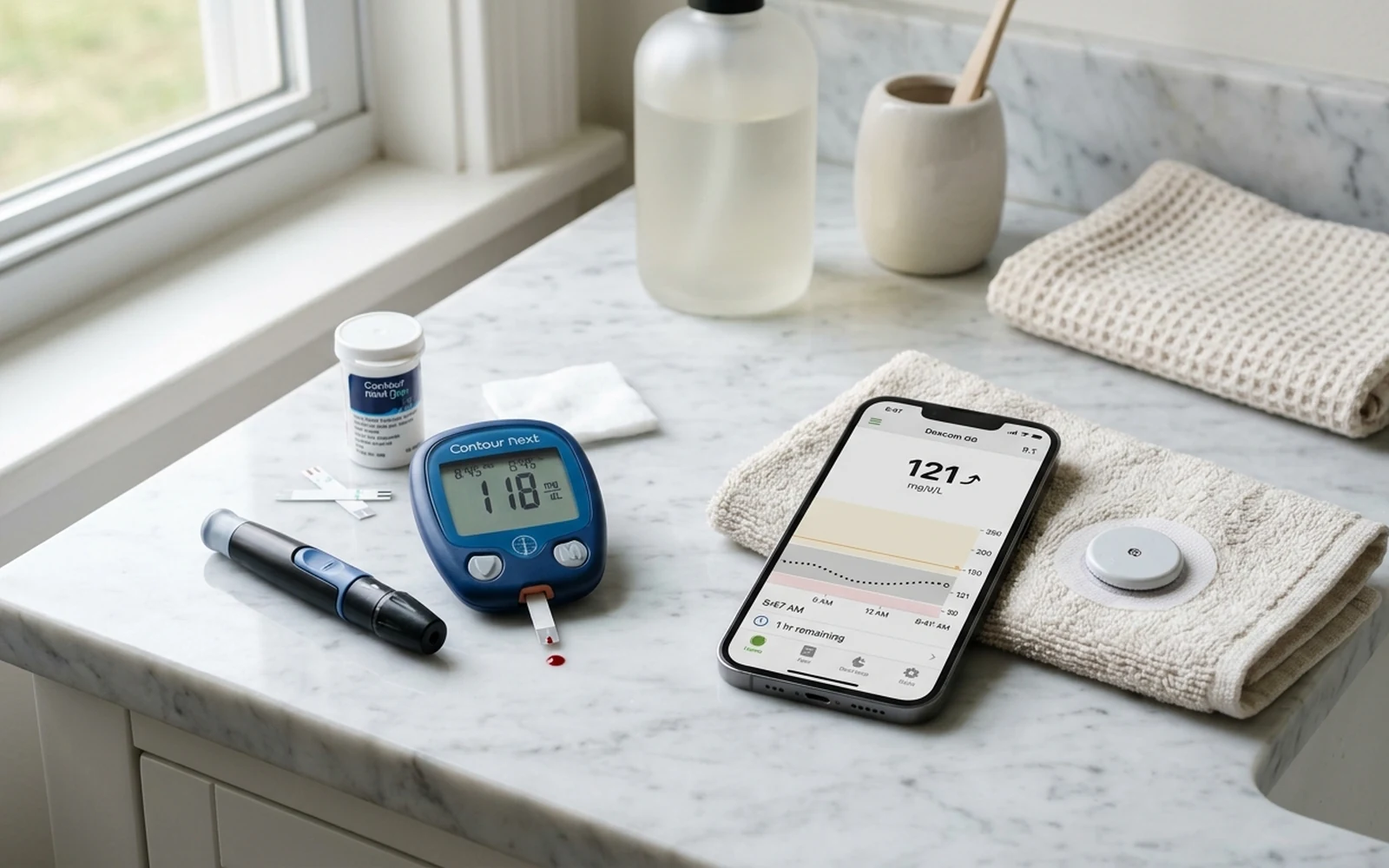
A1C is a laboratory test that provides information about average glucose exposure over the preceding months. It does this by measuring the percentage of hemoglobin in red blood cells with glucose attached. Because red blood cells circulate for weeks, A1C offers a broader view than a home reading taken at one moment. It still does not describe every high, low, meal response, or daily experience. Results need clinical interpretation because conditions affecting blood cells or the test method may influence what the number represents. The word average can be misleading when it is heard as a description of a typical day. An average compresses many possible paths into one summary, so it cannot show whether values were steady, changed recently, or varied at times that home checks did not cover. Prior results, the dates of health changes, and a clearly labeled monitoring sample can help a clinician explain agreement or disagreement without treating either source as a complete account.
The hemoglobin connection
Hemoglobin is a protein in red blood cells that carries oxygen. Glucose in the bloodstream naturally attaches to some hemoglobin. The A1C test measures the proportion with glucose attached, sometimes called glycated hemoglobin. The result is a percentage, not the same unit shown by a glucose meter or sensor.
Red blood cells of different ages circulate together, so the test combines information across time and is weighted more toward recent weeks. It is commonly described as representing roughly the past few months, but that phrase should not be treated as a perfectly even daily average. Biology and cell turnover matter.
A broad view with limits
A1C summarizes exposure but does not display when changes occurred. Two people can have similar averages while experiencing very different daily patterns. One might have relatively steady readings; another might have wider variation. A1C alone cannot reconstruct meals, sleep, symptoms, or the timing of glucose changes.
This limitation does not make the test unhelpful. It means the test belongs in a set of information that may include history, symptoms, home monitoring, sensor reports, other laboratory results, and current treatment. The appropriate combination depends on the clinical question and the person receiving care.
Why results may not line up
People sometimes expect an A1C result and their recent home readings to match exactly. The comparison may be incomplete if checks cover only certain times of day or only a short period. Device variation, missing overnight information, and recent changes can also make the two views appear different without making either automatically wrong.
Conditions that change red blood cell lifespan or hemoglobin can affect A1C. Blood loss, transfusion, some anemias, kidney or liver conditions, pregnancy, and hemoglobin variants are examples a clinician may consider. Do not try to correct or reinterpret a result alone; provide relevant history and ask what the test means for you.
Testing and diagnosis are clinical tasks
A1C can be used in screening, diagnosis, and ongoing care, but those uses have formal clinical requirements. A home estimate or a number discussed online cannot establish a diagnosis. Healthcare professionals decide which test is suitable, whether confirmation is needed, and how symptoms or special circumstances affect the process.
The same principle applies to goals. Public guidelines offer frameworks for clinicians, not a universal number for every individual. Health conditions, risks, treatment, age, pregnancy, access, and personal priorities can all shape a plan. Discuss individual goals with a qualified healthcare professional instead of comparing results with friends.
Preparing for an A1C conversation
Before a visit, note recent changes in health, medicines, monitoring tools, routines, and any events involving blood loss or transfusion. Bring the dates of prior A1C results if they are not already in the record. A short list of questions helps ensure the discussion goes beyond whether the number moved up or down.
Ask what time period the result may reflect, whether any condition could affect accuracy, and how it fits with other observations. If the result is unexpected, the clinician may consider additional information or testing. Continue the agreed plan unless the care team provides individualized instructions; educational explanations do not replace that guidance.
Questions for Your Care Team
These prompts are for a conversation with a qualified healthcare professional. They are not instructions to change a personal care plan.
- What period of my recent health history is most relevant to this A1C result?
- Could any condition, blood event, or hemoglobin factor affect interpretation for me?
- How does this laboratory result fit with the monitoring information I brought?
- What follow-up testing or review schedule is appropriate for my individual situation?
Sources
GlucoContext prioritizes authoritative United States health organizations and peer-reviewed research. External pages are controlled by their publishers.